Most traders want a simple, honest answer to one question: What’s the best time frame for trading?
After nearly twenty years of doing this, here’s what I can tell you with confidence: the daily time frame is the best place for most traders to start because it cuts through market noise and shows cleaner market trends.
It’s cleaner and less stressful.
It also eliminates many false signals and sudden price swings that can make it harder for newer traders to trade.
That said, the “best” time frame can change depending on your trading style, whether you’re day trading, swing trading, or simply trying to refine trading decisions.
So let’s walk through this in a way that actually helps you make better trading decisions and gives you a comprehensive view of market direction.
Best Time Frame for Beginners
If you’re new to trading or still trying to find consistency, the daily chart is the best primary time frame you can use.
Lower time frames, such as 5-minute or 15-minute charts, tend to draw traders into constant monitoring and emotional reactions.
There’s too much “noise” on the lower time frames. That isn’t an issue for experienced traders, but the beginner will struggle to figure out what a valid signal is and what isn’t.
Notice how choppy the EURUSD 5-minute chart is below. You’ll often see this kind of price action on the low time frames.
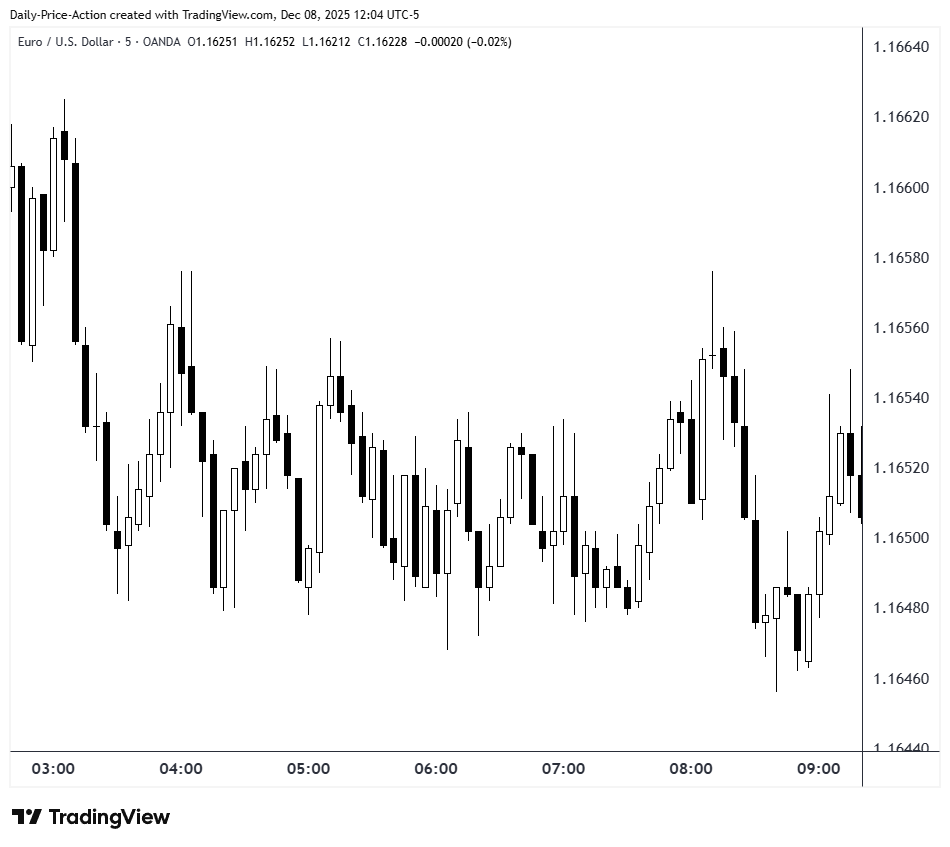
The daily chart slows everything down and gives you more reliable signals to trade price action without getting lost in short-term price movements.
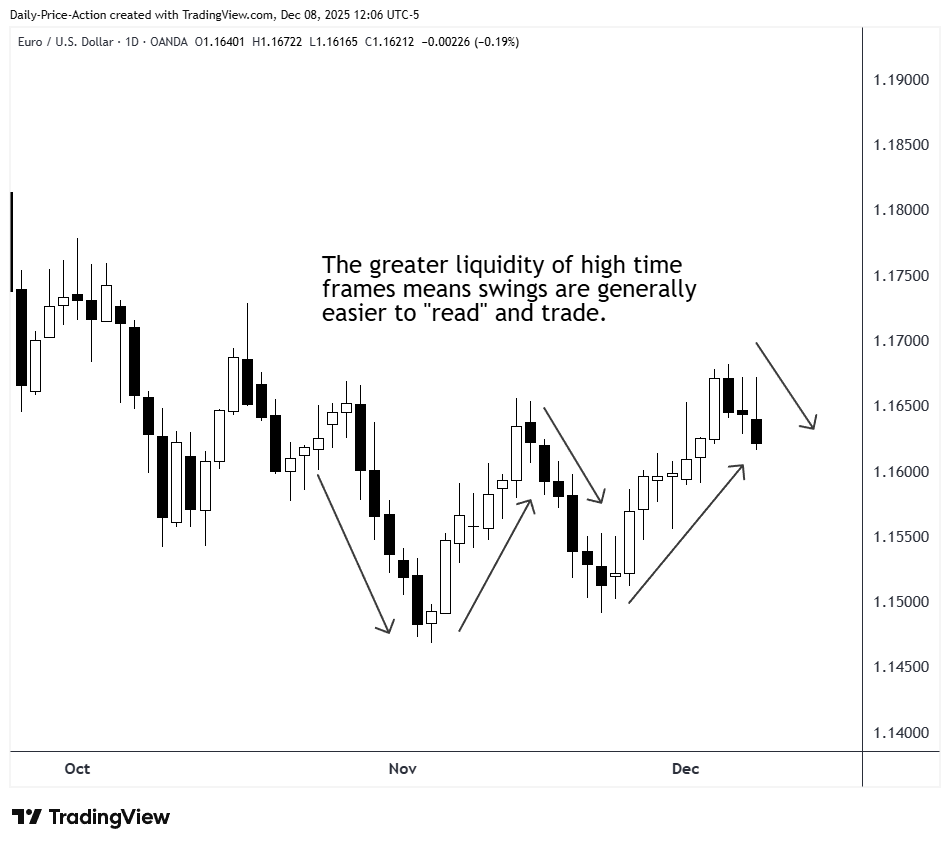
Daily candles contain far more volume and liquidity than lower time frames.
That extra liquidity helps produce cleaner levels, clearer trading signals, and more obvious chart patterns.
If you commit to the daily chart for a few weeks, you’ll notice it becomes easier to understand market conditions and the overall trend.
Think of the daily time frame as your training wheels. Once you get the hang of the higher time frames, you can think about dropping to lower ones like the 4-hour or 1-hour charts.
Best Time Frame for Swing Trading
If you prefer holding trades for a few days or even a week, the combination of the daily and 4-hour charts works extremely well.
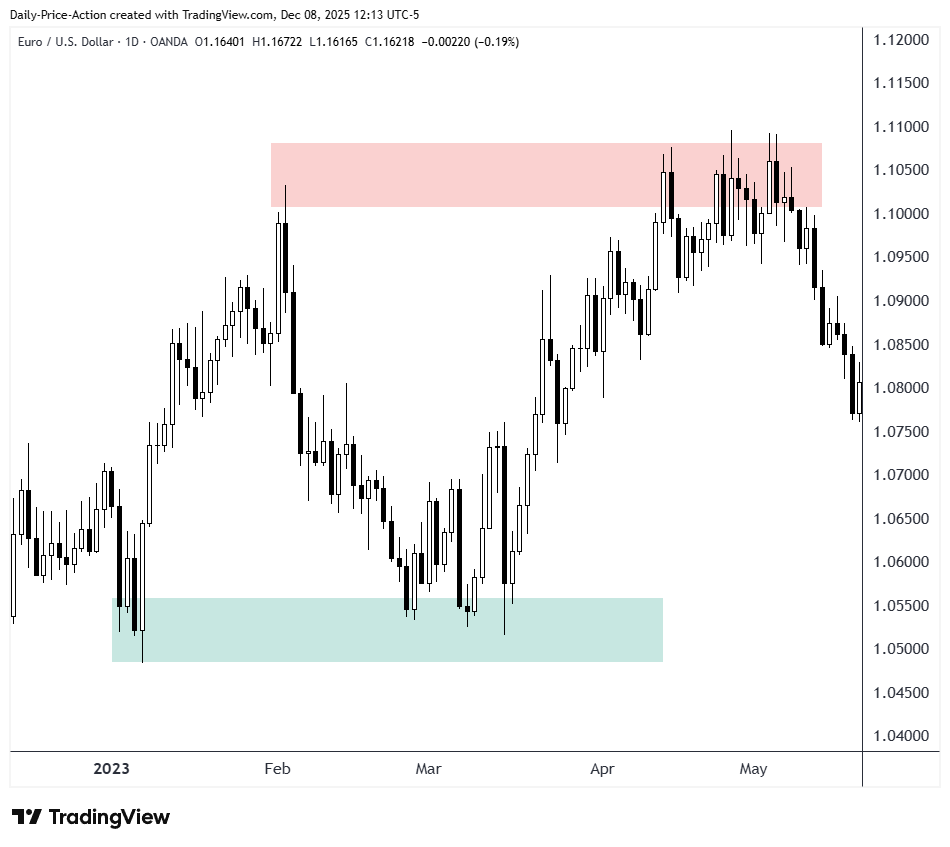
The daily chart gives you the big-picture trend and the most important support or resistance level.
EURUSD daily time frame support and resistance areas for context:
The 4-hour chart provides more trading opportunities while still offering reliable structure for medium term price movements.
This combination is ideal for swing traders who want quality setups without all the noise of intraday trading.
You get a broader market direction from the daily and more refined entry and exit points from the 4-hour.
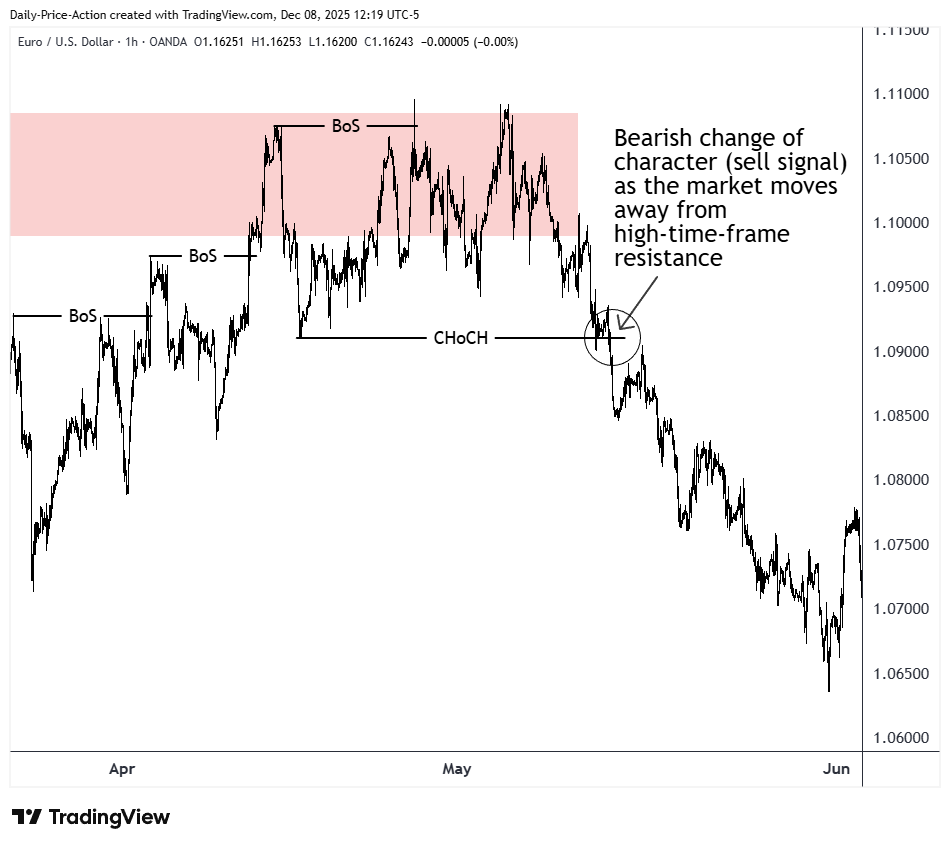
You can then add SMC market structure rules to further elevate your swing trading.
Best Time Frame for Day Trading
Day traders need something faster than the 4-hour chart, but not so fast that market fluctuations distort every bar.
A simple method is to use the 1-hour chart for market analysis and bias, the 15-minute chart for structure or chart patterns, and the 5-minute chart for your entry and exit.
It could also be as simple as using a 1-hour time frame for directional bias and a 5-minute or 15-minute chart to refine entries.
Something like this combination on EURUSD could make sense for you:
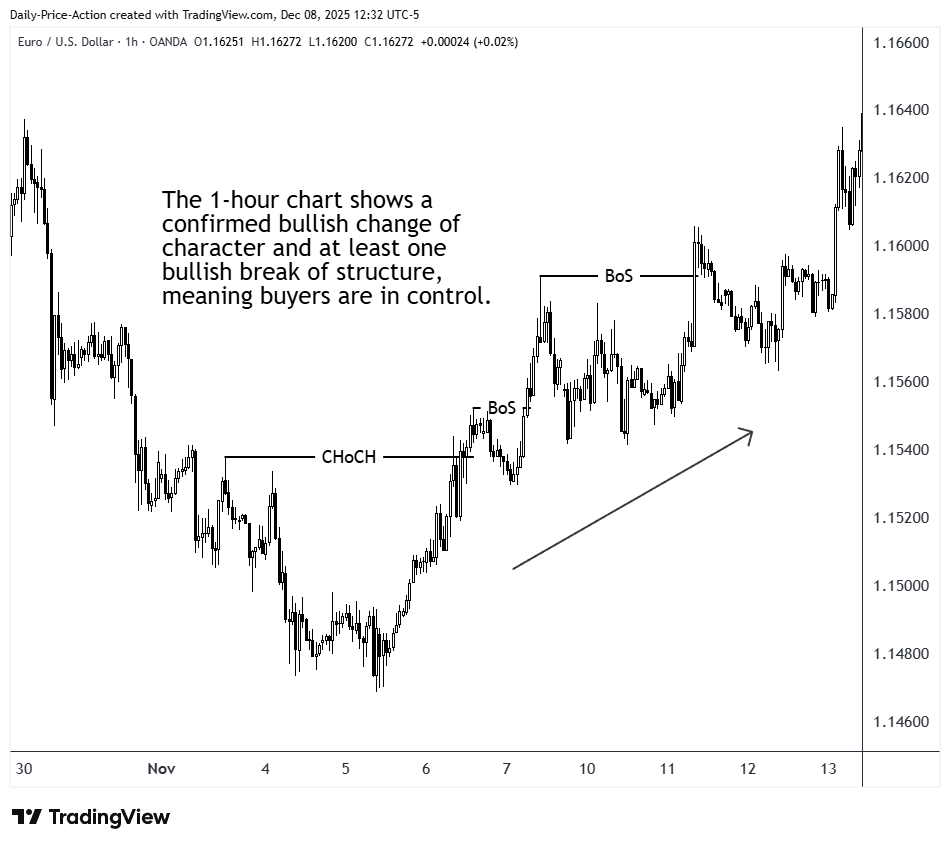
The 1-hour chart above clearly shows that bulls are in control.
Once we know that, it’s a matter of watching for pullbacks into areas of interest and a bullish change of character.
Here’s the 15-minute chart showing a bullish change of character with the trend:
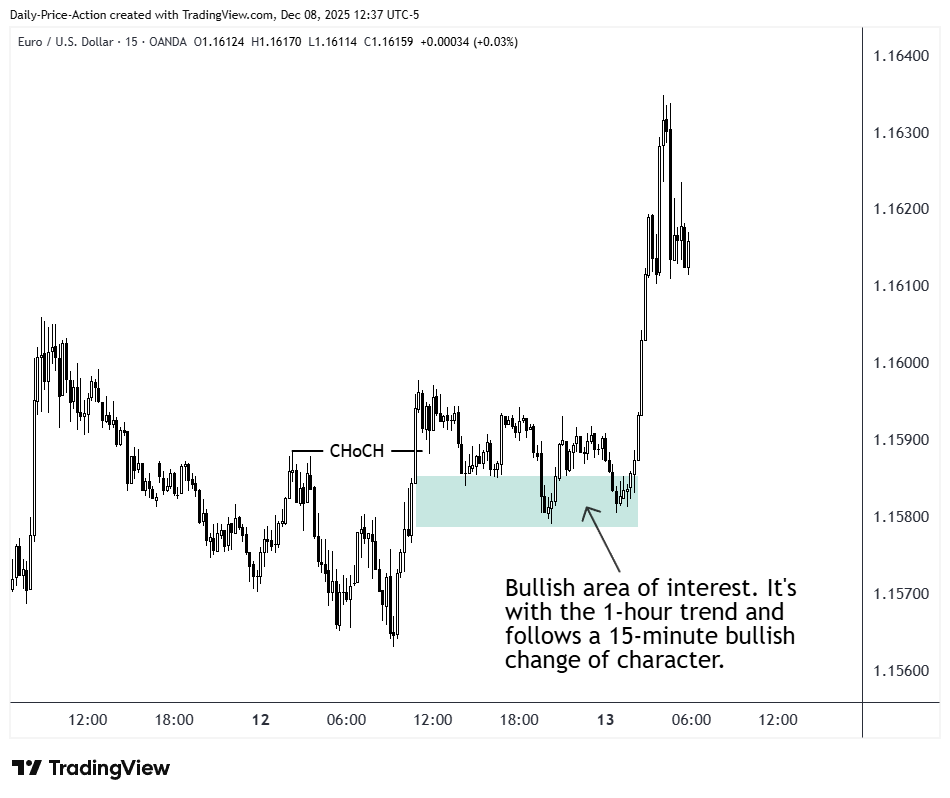
This multi-time-frame strategy keeps you connected to broader market trends while still letting you take advantage of quick price movements.
Anything lower than the 5-minute chart becomes extremely noisy and prone to false signals unless you have a solid trading strategy and very disciplined risk management.
Best Time Frame for Intraday Scalping
If you want to scalp, you’ll eventually spend time on the 5-minute or 1-minute charts.
These charts move quickly and can offer plenty of trading activity, but they’re extremely unforgiving if you don’t understand the broader market direction.
Scalping without a higher-time-frame context is one of the fastest ways to damage an account.
If you choose to scalp, always build your bias on higher time frames first and understand how news events can impact price movements.
See the examples above for ways to stack time frames in your favor.
Daily vs. 4-Hour: Which Is Better?
Both the daily and the 4-hour time frames are excellent for price action and technical analysis, but they serve different purposes.
The daily chart provides fewer setups, but the signals tend to be stronger and easier to read.
The 4-hour chart offers more trading opportunities, but it also brings a bit more market noise and the need for effective risk management.
If you’re new or still learning, start with the daily.
Once you can consistently read the overall trend and stay disciplined, you can add the 4-hour chart to help refine trading decisions.
What’s the Best Time Frame for Trading Overall?
I never like the answer a question with a question, but this is the exception…
The better question is, what’s the best time frame for your trading style?
And the truth is, your trading style should match your personality. It needs to feel comfortable and natural. It also needs to fit your lifestyle.
Figure out your ideal trading style first, then use the examples above to match it with the appropriate time frame. That’s the best flow for figuring out what time frame is best.
What About the Weekly and Monthly Charts?
I don’t trade directly from the weekly or monthly time frames, but I do use them for broader context.
They help you understand long-term trends and highlight the levels that really matter.
A single weekly rejection or strong monthly candle can make all the difference in how you approach the coming days.
Think of the weekly and monthly charts as tools for position traders or anyone wanting a clearer view of the broader market trends.
The daily and 4-hour charts are where most practical decisions are made.
How to Use Multiple Time Frames (Simple Version)
If you want to keep things simple, here’s a straightforward approach using multiple time frames:
- Use the weekly time frame to understand broad market direction.
- Use the daily chart to identify key levels and confirm structure.
- Use the 4-hour chart to refine trading decisions and look for setups.
- If you’re day trading, drop to the 15-minute or 5-minute chart for entries.
This method keeps you aligned with the overall trend while still giving you access to profitable trades.
Final Thoughts
Choosing the right time frame isn’t about hunting for the perfect one.
It’s about choosing the one that matches your trading goals, risk tolerance, and the amount of constant monitoring you want in your trading routine.
For most traders, the daily chart is the best place to start because it provides a comprehensive view of price fluctuations and helps avoid false signals.
Once you’re confident using the daily chart, you can bring in the 4-hour to increase your number of setups.
If you eventually want to explore intraday trading or position trading, you’ll be able to do so with a much stronger foundation.
Keep things simple.
Trade clean levels.
Let the higher time frames guide your trading outcomes.
Frequently Asked Questions
What time frame do most successful traders use?
Most consistently profitable traders use the daily and 4-hour charts to find clean levels, strong market structure, and reliable signals. Lower time frames are usually used only for fine-tuning entries, not for building a full trading plan.
Is the daily time frame good for beginners?
Yes—it’s the best place to start. The daily chart removes most of the noise and false signals that trap new traders, making it easier to read price action and stay disciplined.
What’s the best time frame for day trading?
Most day traders use the 1-hour for bias, the 15-minute for structure, and the 5-minute for entries. Anything lower often becomes too noisy unless you’re very experienced.
Should I use multiple time frames when trading?
Absolutely. A higher time frame provides direction and key levels, while the lower time frame helps fine-tune entries. A simple workflow is weekly → daily → 4-hour → 15-minute.
Can I trade profitably on lower time frames?
Yes, but only if you have a clear strategy that includes higher time frames for context and solid risk management. Lower time frames require more experience because they produce more false signals and emotional decision-making.